The documentation, consistency and commercial terms European cannabis importers should expect from a South African grower before placing a first wholesale order.
European buyers who come to African supply origins are usually chasing two things: cost of cultivation and volume that does not run out in month three. Both are real advantages. What decides whether a supply relationship actually works, though, is far more mundane — whether the grower can produce the same product twice and document it properly both times.
This is a buyer-side checklist. It sets out what a European importer should require from a South African supplier, why each item matters commercially, and which of them are genuinely negotiable.
1. A clear statement of what is being sold
Start by pinning the product down in writing: form (dried flower, trim, biomass, crude extract, isolate), target cannabinoid profile with tolerances, moisture content, and the intended end use. Vague product definitions are where most first orders go wrong, because every downstream document — permit, invoice, certificate of analysis — has to describe the same thing in the same words.
Be explicit about the THC ceiling that applies in your market and whether it is measured as delta-9 THC or total THC. The difference is not academic; a product can pass one definition and fail the other.
2. Site-level authorisation, not a company claim
In South Africa, authorisation to cultivate and handle cannabis is tied to a site and a scope of activity. "We are licensed" is not an answer. Ask which site your product comes from and what that site is authorised to do — cultivate, dry, extract, store.
For controlled, high-THC product, also confirm the supplier understands the two-permit structure: your import authorisation has to exist before their export authorisation can be issued. A supplier who is hazy on that sequence has probably not shipped to Europe.
3. Cultivation standard appropriate to your end use
For raw cannabis entering a regulated European chain, GACP is the practical baseline at the farm. If your product is destined for medicinal use, EU-GMP applies at the manufacturing stage — and that is usually downstream of the farm, not at it.
Decide early which side of that line you are buying on. Buying GACP raw material and processing under GMP yourself is a completely different commercial arrangement from buying finished GMP product, and conflating the two wastes everyone's time.
4. Laboratory results you can actually rely on
Ask for a recent certificate of analysis before you discuss price, and read it properly rather than glancing at the cannabinoid line.
- Which laboratory issued it, and is it accredited?
- Does it cover contaminants as well as cannabinoids — pesticides, heavy metals, microbial load, residual solvents where relevant?
- Does it identify a specific batch or lot, and can that batch be traced to a cultivation block and harvest date?
- Is it recent, and does it reflect the same cultivar and growing conditions as the product you are being offered?
A certificate that cannot be tied to a batch tells you about a sample, not about your order. For a first shipment, many importers arrange their own independent testing on arrival as well. A confident supplier will expect that.
5. Evidence of consistency across volume
Anyone can produce one good harvest. The commercial question is variance. Ask what the supplier's cannabinoid profile looks like across several harvests, how much of the crop typically meets specification, and what happens to the portion that does not.
Multi-site groups have an advantage here, because they can balance production across sites and blocks rather than depending on one field's season. Ask how many sites are behind your volume and whether standards are managed centrally across them.
6. Honest volume and lead-time figures
Get three numbers on the table: minimum order quantity, the volume the supplier can deliver per cycle without straining, and the lead time from signed order to shipment. Then ask what that lead time assumes about permits, because permit cycles usually dominate the schedule on a first order.
Be sceptical of a supplier who quotes a lead time in days for a controlled-product first shipment. It signals they are quoting harvest availability and ignoring the regulatory path.
7. A documentation pack, defined in advance
Agree in writing who produces what. A typical division for a European import looks like this:
- Supplier: export authorisation, certificate of analysis, batch and lot records, certificate of origin, phytosanitary certificate where required, commercial invoice and packing list
- Importer: import authorisation from your competent authority, customs entry, any market-specific labelling and registration on arrival
- Jointly: agreement on product description wording used consistently across every document
That last line prevents the single most avoidable delay in this trade — a permit and an invoice that describe the same goods differently.
8. Commercial terms that survive a bad harvest
Cannabis is agriculture. Any contract worth signing addresses what happens when a crop underperforms or a batch fails specification: replacement, price adjustment, timing, and who carries the cost of rejected product. Also settle Incoterms, payment structure, and which party bears freight and insurance risk at each stage.
For an ongoing relationship, a supply agreement with scheduled volumes is almost always better than a series of spot purchases. It gives the grower something to plan plantings around, which is exactly what improves your consistency.
9. People you can reach
Unglamorous but decisive: know who your named contact is, who handles regulatory paperwork, and how quickly you get answers during an application window. Cross-border cannabis trade generates a steady stream of small, time-sensitive questions. A supplier who answers slowly at the enquiry stage will answer slowly when a permit query lands.
Talking to Genesis Farms
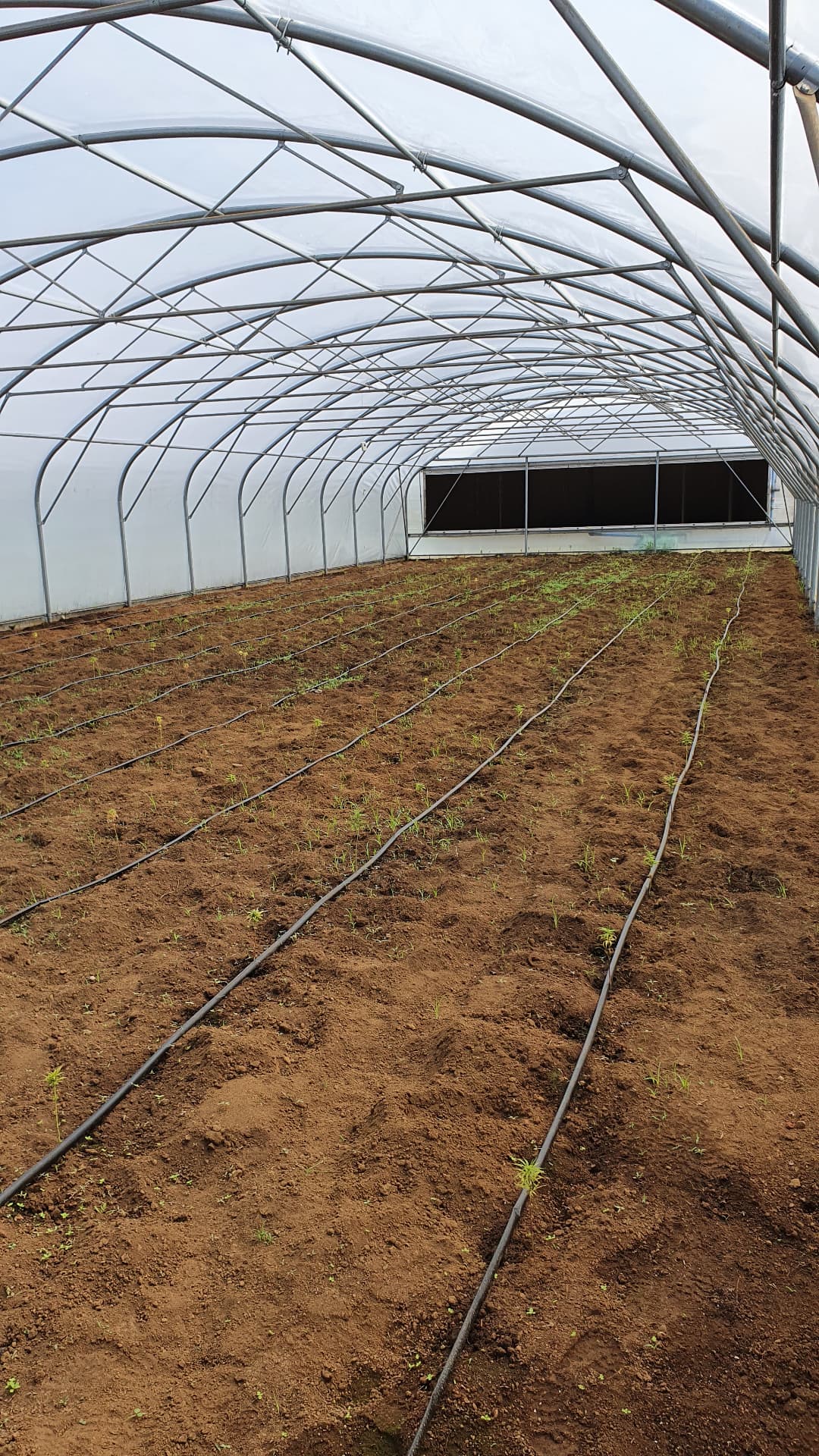
Genesis Farms is a group of South African cannabis farms growing CBD and THC at commercial scale for export to Europe and the United States. Cultivation is managed in-house across greenhouse tunnels, nurseries and open fields, and we supply commercial buyers at wholesale minimum order quantities.
If you are working through a checklist like the one above for a European import, send us your product specification and target volume and we will respond with what we can hold, at what scale, and what documentation we supply as standard.