A plain-language guide for international buyers to the licences, permits and export documentation involved in moving cannabis, THC and CBD out of South Africa.
If you are a licensed importer, manufacturer or distributor looking at South Africa as a supply origin, the first question is almost always the same: is this actually exportable, and what paperwork sits behind it? This guide walks through how the chain of authorisations works, who issues what, and which documents a serious supplier should be able to put in front of you before you commit to an order.
Regulation in this sector changes, and it changes at both ends of the shipment. Nothing below is legal advice. Treat it as an orientation to the structure, then verify the current position with your own regulatory advisor and with the competent authority in your destination market.
Two different legal products, two different routes
The single most common source of confusion is treating "cannabis" as one commodity. For export purposes it splits into at least two very different categories, and they travel under different rules.
- High-THC cannabis (medicinal cannabis, flower, biomass or extract) is a controlled substance. It requires cultivation authorisation in South Africa, an export authorisation for each shipment, and a matching import authorisation issued in the destination country before the shipment can move.
- Low-THC cannabis and CBD products sit in a different regulatory lane. They are generally not handled as narcotics, but they are subject to THC thresholds, and those thresholds differ by market. A product that is compliant in one country can be non-compliant in the next.
Before anything else, be explicit with your supplier about which category you are buying, what THC ceiling applies in your market, and in what form the product will leave the farm — dried flower, trim, biomass, crude extract or isolate. Every downstream document follows from those three answers.
Step one: cultivation and handling authorisation in South Africa
For medicinal, high-THC cannabis, the grower needs authorisation from the South African Health Products Regulatory Authority (SAHPRA) to cultivate and handle the plant. In practice that authorisation is site-specific: it names the facility, the activities permitted there, and the security and record-keeping conditions attached.
What this means for you as a buyer is simple. A licence is not a company-wide badge — it belongs to a site and a scope of activity. Ask which site your product will come from, and confirm that the authorisation covers the specific activity you need, whether that is cultivation, drying, extraction or storage.
Step two: the export authorisation
Cultivation authorisation does not by itself permit an international shipment. For controlled cannabis, each consignment normally needs its own export authorisation, issued against a specific quantity, a specific product description and a named consignee.
Critically, this is a two-key system. The exporting country's authorisation is issued on the strength of an import authorisation already granted in the destination country. Your supplier cannot obtain the export side without you first securing the import side. If a supplier tells you they can ship controlled cannabis without an import permit in your name, that is a signal to walk away.
- You, the importer, apply to your own competent authority for an import authorisation naming the exporter, the product and the quantity.
- You send that authorisation to the exporter.
- The exporter applies in South Africa for the matching export authorisation.
- Only once both are in hand does the consignment move, under the quantities stated on the permits.
Because permits are quantity-bound, splitting or increasing an order mid-process usually means new paperwork rather than an amendment. Build that into your timeline: permit cycles, not harvest cycles, are normally what set the date of a first shipment.
Step three: the commercial and customs documentation
Alongside the regulatory permits, a shipment carries the ordinary international trade pack. For a first-time buyer this is usually the least surprising part, but incomplete documents are still the most common cause of a consignment sitting still.
- Commercial invoice and packing list, with product descriptions that match the permits word for word
- Bill of lading or air waybill
- Certificate of origin
- Phytosanitary certificate, where the destination market requires one for plant material
- Certificate of analysis from an accredited laboratory, covering cannabinoid content and contaminant screening
- Batch and lot records tying the consignment back to a specific cultivation block and harvest
One detail is worth dwelling on. The product description on the invoice, on the permits and on the certificate of analysis must agree. A mismatch as small as a different product name between the permit and the invoice can hold a shipment at the border, and resolving it is far slower than getting it right the first time.
Step four: quality standards your market will expect
Permits make a shipment lawful. Quality certification is what makes it sellable. Which standard applies depends entirely on what you intend to do with the product.
- GACP (Good Agricultural and Collection Practice) applies to the cultivation and primary processing stage, and is the baseline expectation for raw cannabis entering a regulated supply chain.
- GMP (Good Manufacturing Practice), and in Europe specifically EU-GMP, applies to pharmaceutical manufacture and to product intended for medicinal use in that market.
- Market-specific requirements may sit on top of both — testing panels, packaging rules and labelling rules that differ country by country.
A useful rule of thumb: raw agricultural product is generally grown to GACP and then processed under GMP downstream. Be precise about where in that chain you are buying, because it determines what your supplier needs to demonstrate and what you will need to add on your side.
What to ask a South African supplier on the first call
You can filter most of the market with six questions, and you do not need to be a regulatory specialist to ask them.
- Which site will my product be grown at, and what activities does that site's authorisation cover?
- Have you exported to my market before, and can you describe how that consignment moved?
- What cannabinoid profile can you hold consistently, and across what volume?
- Which laboratory does your testing, and can I see a recent certificate of analysis?
- What is your minimum order quantity, and what lead time follows a signed order?
- Which documents do you supply as standard, and which do you expect me to obtain?
The last question matters more than it looks. Export is a shared workload. A supplier who is clear about the division of responsibility at the outset is usually a supplier who has done it before.
Realistic timelines
For a first order with a new counterparty, plan in months rather than weeks. Due diligence and sample assessment, import permit application, export permit application, then production and freight each consume real time, and they only partially overlap. Repeat orders with the paperwork pattern already established move considerably faster, which is why most commercial relationships in this sector are structured as supply agreements rather than one-off purchases.
Where Genesis Farms fits
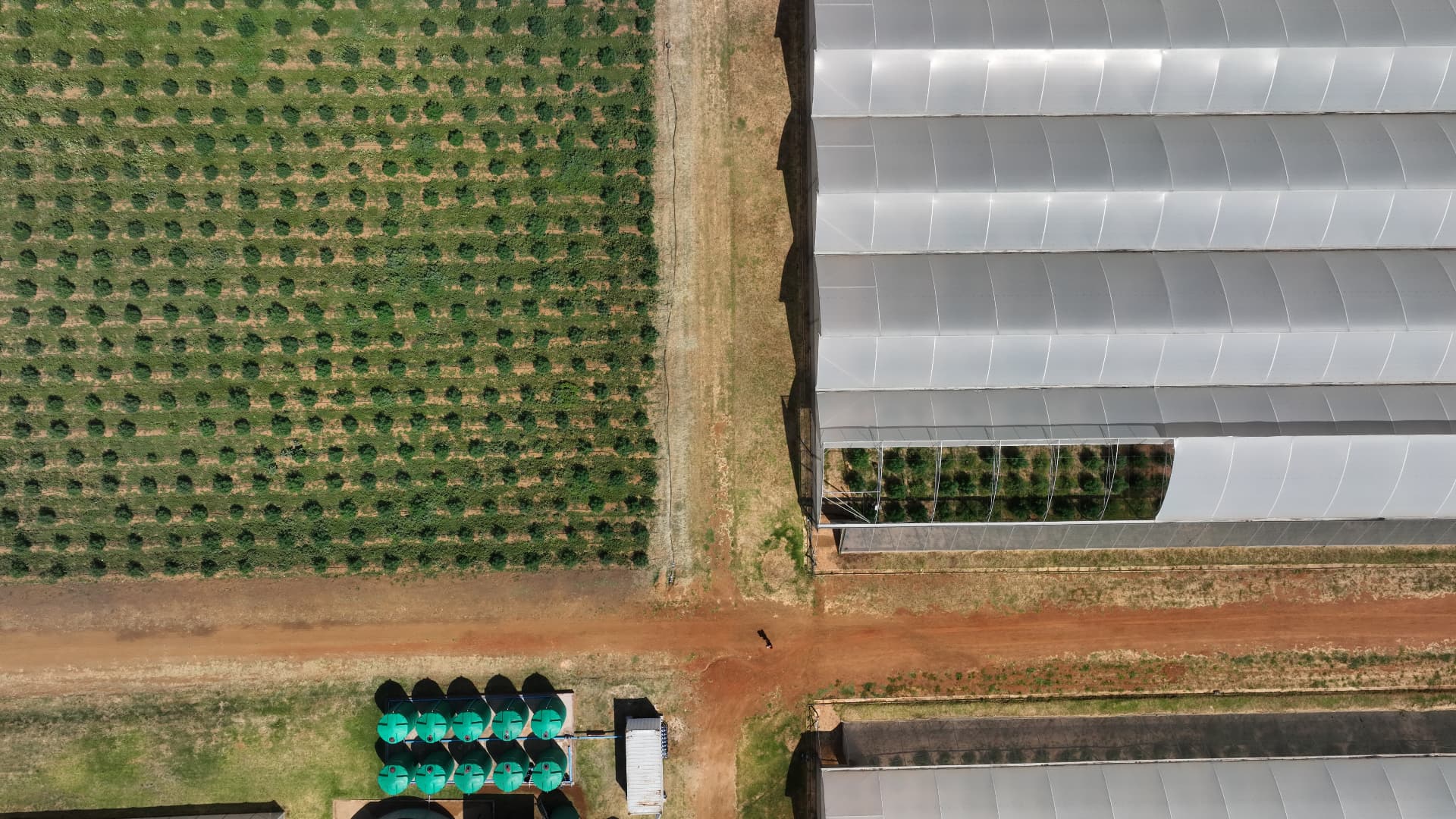
Genesis Farms represents a group of South African cannabis farms growing CBD and THC at commercial scale for export to Europe and the United States. We operate greenhouse tunnels, nursery facilities and open fields, with cultivation managed in-house from seedling through to harvest, which is what lets us hold a consistent profile across the volumes international buyers need.
We work with commercial buyers only, with minimum order quantities set at wholesale scale. If you are assessing South Africa as a supply origin and want to talk through volumes, cultivars and documentation for your specific market, get in touch and we will answer in detail.